Indigo
Indigofera tinctoria
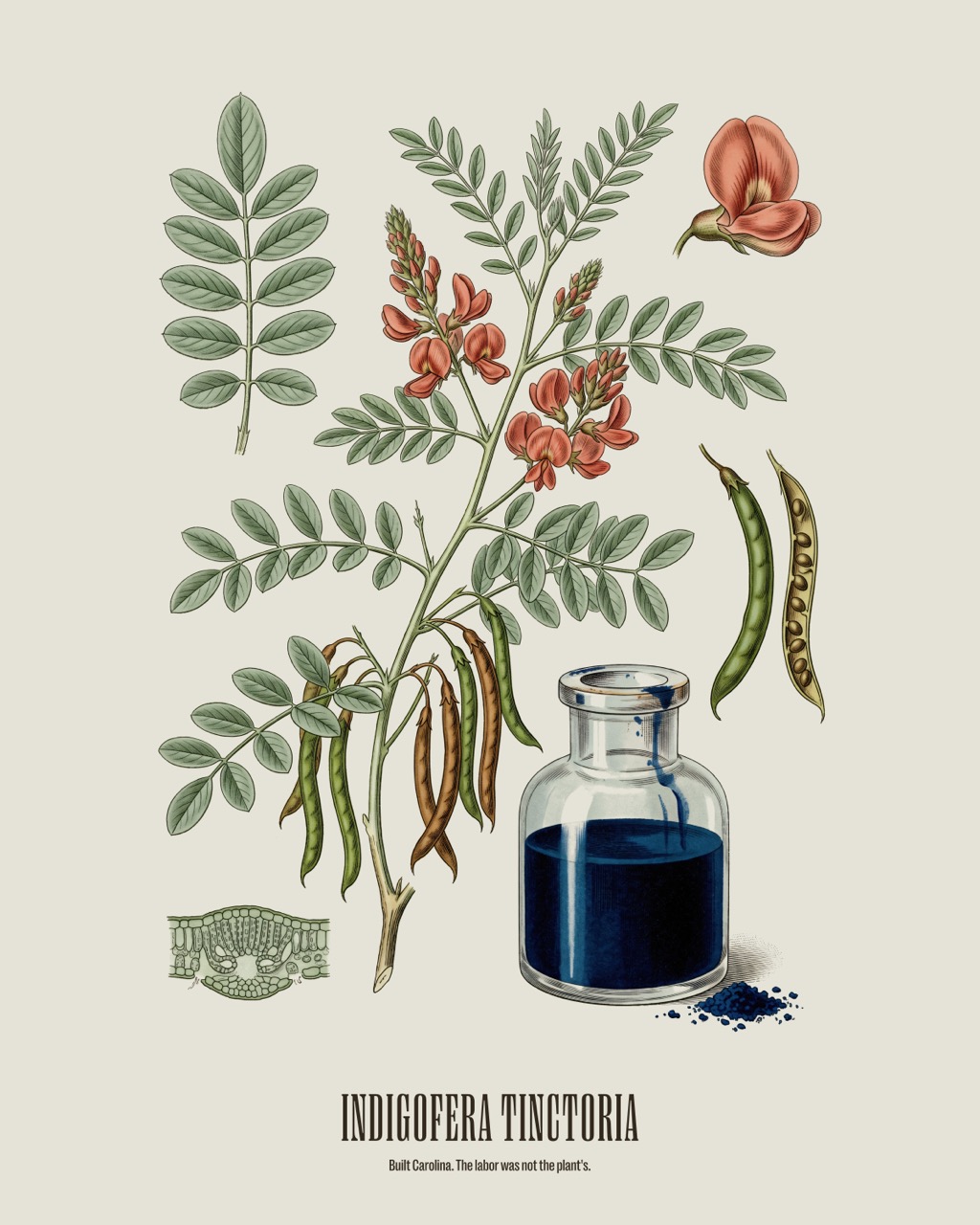
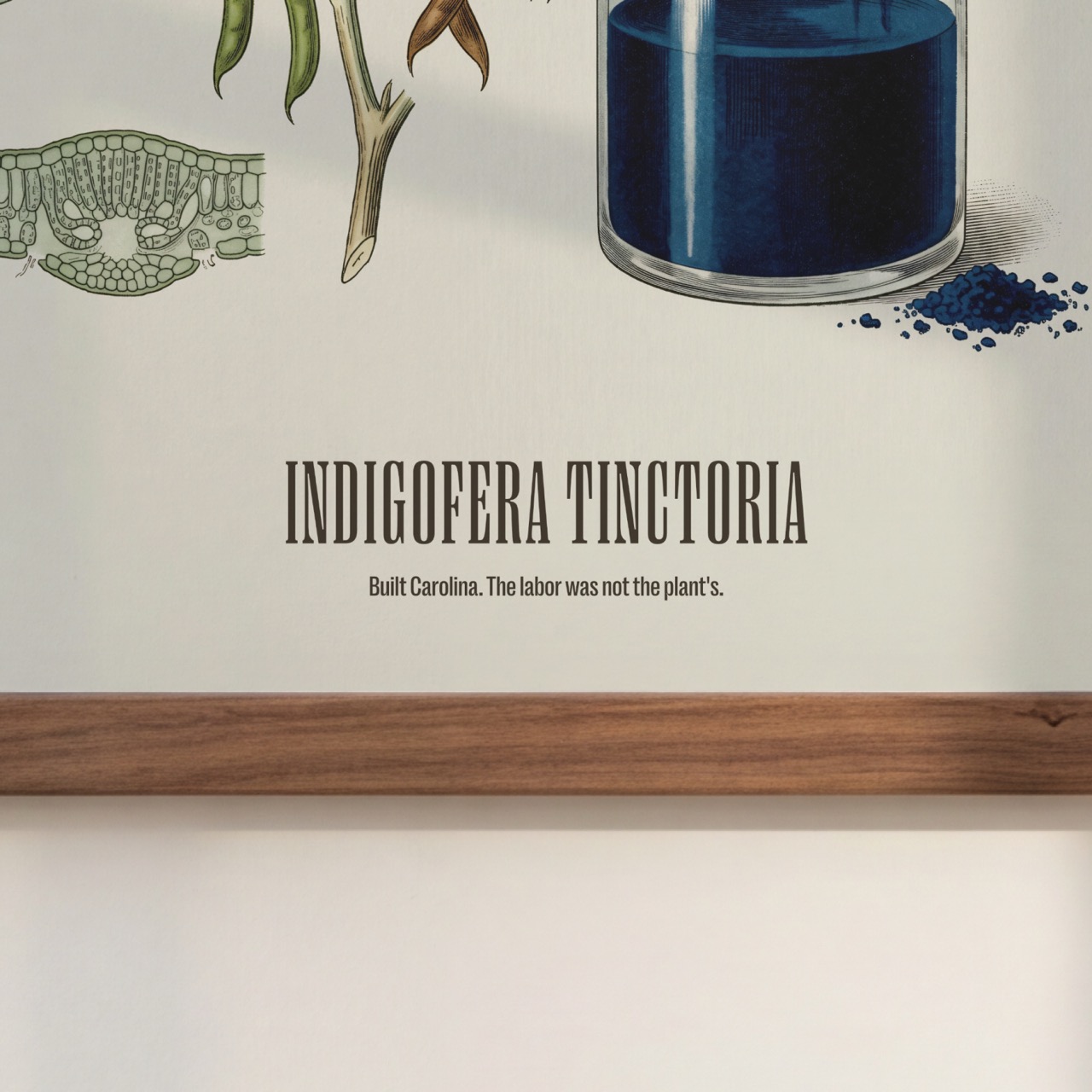
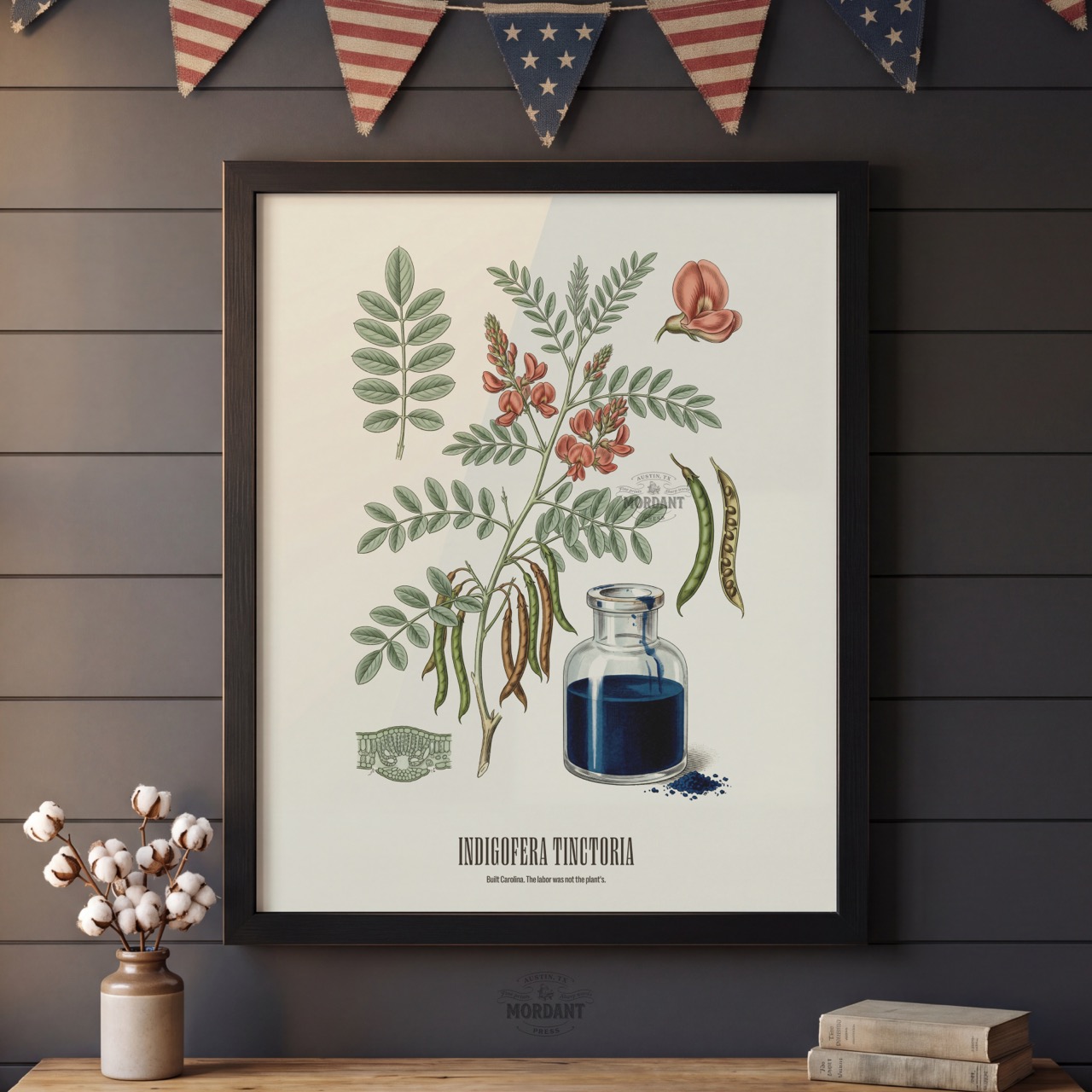
Built Carolina. The labor was not the plant's.
By the 1740s indigo was the Carolinas’ second cash crop, after rice, a deep blue dye prized in every European court. Eliza Lucas Pinckney, who took over her family’s South Carolina plantations at sixteen, spent several years proving the crop could be grown and processed there, and the textbooks celebrate her for it. They tend to be quieter about the enslaved West Africans whose technical knowledge of indigo cultivation and fermentation made the industry possible, and whose hands did the work. The plant is beautiful. The accounting is not.